
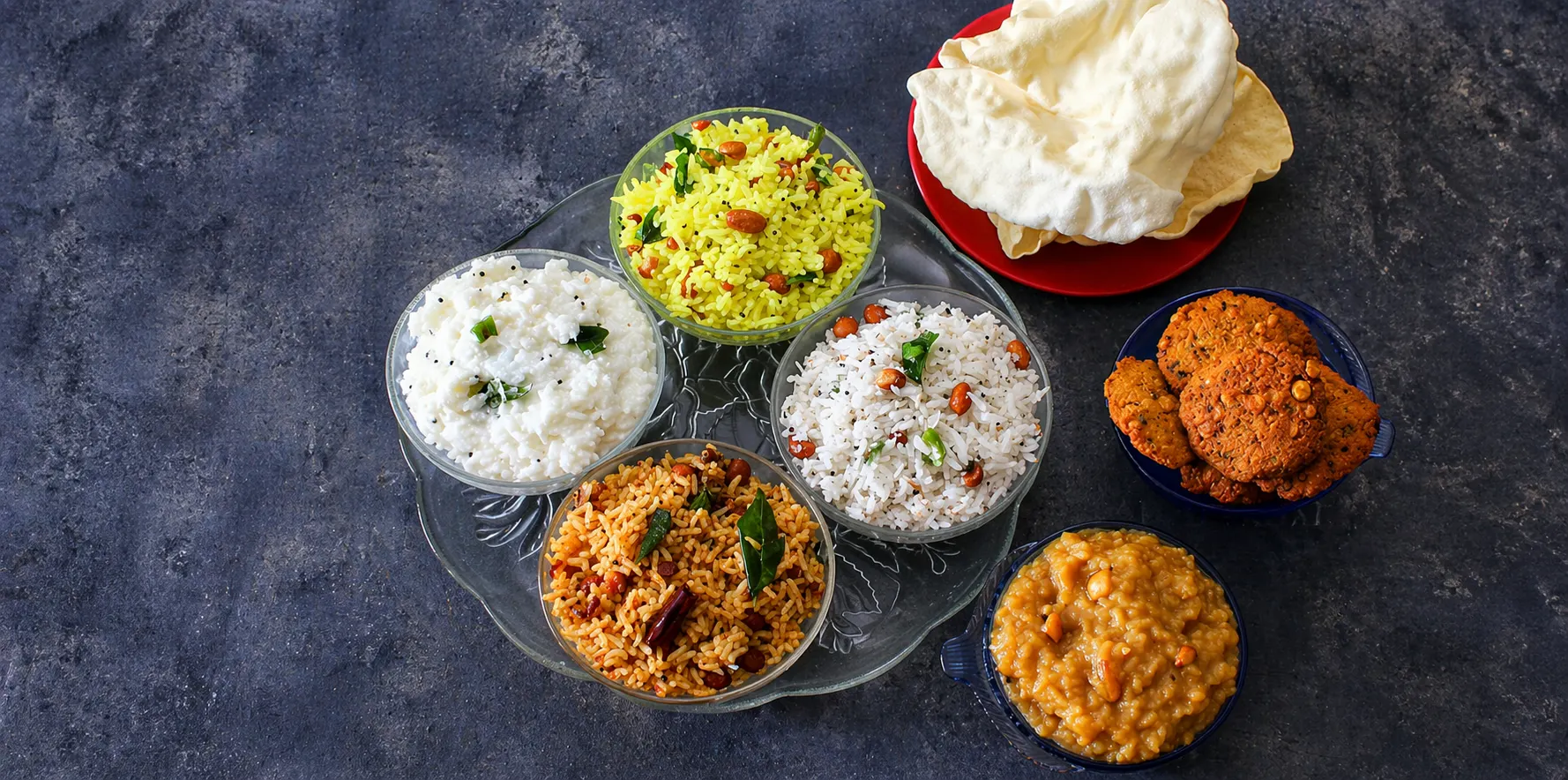
Rice in South Indian cooking is far more than a neutral side dish. With the right tempering, seasoning, herbs, vegetables, or yogurt, a simple bowl of cooked rice can become an entirely different meal.
Tamarind can make it tangy and deeply savory, lemon adds freshness, yogurt creates a cooling finish, and traditional spice mixtures bring layers of aroma and texture.
That versatility is worth understanding when searching for Indian Variety Rice Dishes in Cary, NC. Rather than choosing one elaborate entrée, diners can explore several distinctive rice preparations, each rooted in everyday South Indian vegetarian food.
For vegetarian diners, families, officegoers, and anyone curious about regional Indian cuisine, variety rice offers an accessible way to discover just how expressive a familiar grain can be.
Table of Contents
- What Does “Variety Rice” Mean in South Indian Cuisine?
- Why Does Tempering Matter So Much?
- How Can One Grain Create So Many Different Dishes?
- Indian Variety Rice Dishes in Cary, NC: Where A2B Fits
- Which Variety Rice Should First-Time Diners Try?
- Why Variety Rice Works Beyond the Lunch Table
- How Should You Build a Variety Rice Meal?
- Frequently Asked Questions
- A Simple Dish with a Larger Cultural Story
What Does “Variety Rice” Mean in South Indian Cuisine?
Variety rice refers to cooked rice seasoned or combined with distinctive ingredients to create individual dishes, such as lemon rice, tamarind rice, curd rice, coconut rice, or vegetable-based preparations. Each has its own flavor profile, tempering, texture, and traditional place within South Indian vegetarian cooking.
The concept is different from simply serving curry over plain rice. In a variety of rice, the seasoning becomes part of the rice itself.
In Tamil culinary traditions, several of these preparations fall broadly into the category of kalanda sadam, meaning mixed rice. Cooked rice is combined with a prepared seasoning or mixture, so the flavor coats the grains evenly.
This makes Traditional Indian Variety Rice Cary NC particularly interesting for diners who want to explore regional food beyond familiar restaurant staples.
Why Does Tempering Matter So Much?
Tempering is one of the techniques that gives South Indian variety rice its distinctive character.
Mustard seeds may crackle in hot oil before being joined by curry leaves, lentils, dried chilies, or other aromatics. The hot fat extracts and carries their flavors through the rice. Roasted lentils or nuts can also provide small bursts of crunch against the soft grains.
This creates an important lesson about Indian cooking: spice isn’t only about heat.
A well-made tempering can contribute to nuttiness, fragrance, earthiness, and texture without making a dish overwhelmingly hot. Even two rice preparations using similar ingredients can taste dramatically different depending on the balance of sourness, seasoning, and tempering.
How Can One Grain Create So Many Different Dishes?
South Indian variety rice changes character through the ingredients mixed with cooked rice. Lemon creates a bright, citrus-forward dish; tamarind produces deeper sweet-sour complexity; yogurt makes curd rice creamy and cooling; coconut contributes gentle richness. Tempering with mustard seeds, curry leaves, lentils, and chilies adds another layer of flavor and texture.
Consider lemon rice. Its sunny appearance matches its flavor: fresh, tangy, and lively. Mustard seeds and curry leaves introduce fragrance, while roasted lentils or nuts can provide crunch.
Tamarind rice, often associated with preparations such as puliyodarai or pulihora in different regional traditions, moves in another direction. Tamarind gives the rice a deeper tang, while spices add warmth and complexity. The result is concentrated and savory rather than simply sour.
Then there is curd rice, which is intentionally gentle. Soft rice mixed with yogurt creates a creamy, cooling texture, often finished with light tempering. In many South Indian meals, it is enjoyed toward the end because its mild character provides contrast after stronger flavors.
That sequence itself is an information-rich part of the cuisine: foods aren’t always eaten in arbitrary order. Temperature, intensity, and balance can shape how a traditional meal progresses.
Indian Variety Rice Dishes in Cary, NC: Where A2B Fits
Once diners understand the tradition behind these dishes, A2B becomes relevant for those seeking South Indian Variety Rice Cary NC within a pure vegetarian setting.
A2B’s broader vegetarian menu allows a variety of rice to be experienced alongside other South Indian vegetarian food rather than in isolation. This gives diners context for how rice, lentils, vegetables, chutneys, fermented foods, and traditional accompaniments work together.
For Cary residents, this style of food also fits several everyday dining occasions. Variety rice can make sense for a weekday lunch when something satisfying but straightforward is preferred. Families can include rice preparations in a larger weekend spread; for larger celebrations or community gatherings, diners can also explore A2B’s vegetarian catering options.
For someone searching for Variety Rice Near Me Cary NC, understanding the preparation is more useful than simply finding the nearest plate of rice.
Which Variety Rice Should First-Time Diners Try?
First-time diners should choose a variety of rice according to flavor preference: lemon rice for something bright and tangy, tamarind rice for deeper sour and spiced notes, and curd rice for a creamy, mild, cooling option. Ordering contrasting varieties together provides a clearer introduction to South Indian rice traditions.
If you enjoy citrus-forward flavors, begin with lemon rice. It is particularly approachable because its acidity feels fresh rather than heavy.
Tamarind rice suits diners who want greater intensity. Its darker seasoning and layered sweet-sour character demonstrate how South Indian cooking uses acidity as a major flavor component.
Curd rice is ideal for anyone seeking something soothing. Its creamy consistency and restrained seasoning create an entirely different experience.
Diners who are still deciding what else to try can explore this guide to South Indian dishes for first-time visitors.
Why Does Variety Rice Work Beyond the Lunch Table?
Variety rice is closely connected with everyday South Indian food culture because it is practical, flavorful, and adaptable.
Some preparations travel well, which historically made mixed rice useful for journeys and packed meals. Tamarind-based rice is especially associated with temple traditions and festive occasions in parts of South India family dinner, while curd rice has a strong connection to comforting everyday meals.
In Cary, those qualities translate naturally to modern routines. Vegetarian South Indian Food Cary NC may be needed for an office lunch one day and a relaxed family meal the next. Rice dishes can also complement larger spreads for cultural celebrations and community gatherings.
This versatility helps explain why traditional preparations remain relevant even when dining habits change.
How Should You Build a Variety Rice Meal?
A good approach is to prioritize contrast.
Choose one tangy preparation, such as lemon or tamarind rice, then balance it with something milder. Add a crisp accompaniment or vegetable preparation for texture. If curd rice is part of the meal, consider enjoying it toward the end for a softer finish.
Diners exploring an Indian Restaurant in Cary NC for the first time can also combine variety rice with Uthappam in Cary or other vegetarian dishes. The goal isn’t to order as many items as possible; it is to experience different cooking techniques and flavor profiles.
This approach works especially well for family-style dining because everyone can sample smaller portions.
Frequently Asked Questions
What is South Indian variety rice?
South Indian variety rice is a broad category of cooked rice preparations in which seasonings and other ingredients are mixed directly with the rice. Examples include lemon rice, tamarind rice, curd rice, and coconut-based preparations. Each uses different flavoring techniques, making a variety of rice much more diverse than simply seasoned plain rice.
Which variety of rice is suitable for someone new to South Indian food?
Lemon rice is an approachable starting point for diners who enjoy bright, tangy flavors, while curd rice works well for those who prefer something mild and creamy. Tamarind rice offers a stronger introduction to traditional sour and spiced flavors. Trying two contrasting preparations is often the easiest way to understand the category.
Is Indian variety rice suitable for vegetarian family dining?
Yes. Variety rice is firmly established within South Indian vegetarian food traditions and works particularly well for sharing. Families can combine different rice preparations with vegetable dishes, lentil-based foods, chutneys, and other accompaniments, allowing both adults and children to explore different textures and levels of seasoning during the same meal.
Is variety rice only considered a breakfast or lunch food?
No. Although variety of rice is commonly associated with everyday lunches, packed meals, temple traditions, and travel food, it isn’t restricted to one time of day. Depending on the preparation and accompaniments, it can work as a weekday meal, part of a family dinner, or one component of a larger vegetarian celebration spread.
A Simple Dish with a Larger Cultural Story
Variety rice shows how South Indian cooking can create remarkable diversity from familiar ingredients. Lemon, tamarind, yogurt, coconut, curry leaves, mustard seeds, lentils, and traditional tempering techniques can each transform rice without making the preparation unnecessarily complicated.
For diners seeking Indian Variety Rice Dishes in Cary, NC, A2B offers a useful setting for exploring these flavors within the broader context of pure vegetarian Indian cuisine. It can appeal equally to Indian-origin families looking for familiar regional tastes and Cary diners interested in understanding South Indian food beyond dosa and idli.
These dishes connect everyday comfort, regional traditions, practical cooking, and generations of vegetarian food culture all through the versatility of a single grain.